
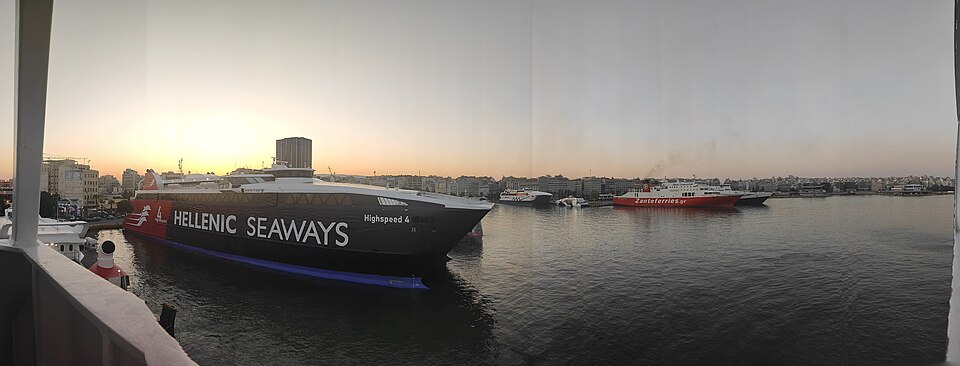
Photograph: Hellenic Seaways ferry at Piraeus port (2021), by Leeturtle, CC BY-SA 4.0. Resized for this page; some previews may be cropped. The photograph and its previews retain this licence.
Port information checked against official sources on 15 October 2026.
“Piraeus port” is useful as a general destination, but it is not a complete meeting instruction. A traveller arriving on a ferry and a traveller leaving a cruise ship may come through different passenger facilities. Before arranging an onward journey, identify the vessel, travel date and the location relevant to your own arrival.
The Piraeus Port Authority publishes separate information for coastal ferry terminals and its cruise terminal facilities. That distinction is the starting point for an easier pickup. The right plan combines current vessel information with the meeting instructions confirmed for your booking.
First, identify whether you are travelling by ferry or cruise ship
A ferry gate and a cruise passenger terminal are different ways of describing where travellers need to go. Do not substitute one for the other when discussing your journey. If your itinerary is unclear, check it with the ferry company, cruise line or travel organiser before choosing a location on a map.
For a ferry, keep the company, ship name, sailing date and departure or arrival details together. For a cruise, have the cruise line, ship name, date and terminal information supplied for your voyage. Use the full ship name where possible; a destination or island name alone may not identify the service you are taking.
A gate number is a useful reference, not the whole pickup plan
The port authority’s coastal-terminal page provides gate and destination information. Use official information to orient yourself, then check the details for your specific sailing. Do not treat a gate mentioned in an old article as a permanent assignment for every departure to an island.
Likewise, a gate number does not establish exactly where a private vehicle may wait or where a driver will meet you. Follow the confirmed instructions for your own booking. If the instructions give a particular exit or meeting landmark, keep that wording available instead of reducing it to a generic “Piraeus” map pin.
For a cruise, check the passenger terminal
The port authority describes three cruise passenger terminals and transport between ships and passenger stations. Your ship’s berth and the passenger meeting location should not be assumed to be the same point. Confirm which terminal or exit applies to your voyage and how that relates to the instructions you have received.
A general map of the cruise port is helpful for orientation, but it cannot confirm a private booking’s arrangements. Do not walk towards another terminal simply because its name looks familiar. If the location in your travel documents and your meeting instructions differ, clarify the difference before moving away from the agreed point.
Prepare the details needed for an onward transfer
A short, accurate set of travel details makes it easier to check arrangements:
- Your ferry company or cruise line and ship name.
- The travel date and scheduled arrival or departure.
- The gate or terminal information currently supplied for your journey.
- Your onward destination, including the accommodation address or flight details where relevant.
- The number of passengers and the luggage or other items that affect vehicle choice.
These details support planning; they do not create a booking by themselves. Review the confirmation, price and conditions for the service you actually arrange. Keep the booking contact method and meeting instructions accessible after you leave the vessel.
Allow for leaving the ship before starting the drive
A vessel’s scheduled arrival is not necessarily the moment you can meet a driver. Disembarkation, baggage collection where applicable and reaching the passenger exit all take time. Build the plan around those stages rather than treating arrival and vehicle departure as identical.
If your next stop is the airport, include the airline’s own check-in and boarding requirements as well as the road journey and traffic uncertainty. Explore the Piraeus to Athens Airport transfer and check the timing against your own itinerary. A drive estimate alone cannot establish that a ship-to-flight connection is achievable.
Check changes before travelling to the meeting point
Recheck vessel information with the company or organiser responsible for your journey. If a delay, changed terminal or different arrival point affects the plan, use the contact method in your booking to clarify what to do. Do not assume that an arrangement automatically moves to another gate or includes unlimited waiting.
For travel in the opposite direction, review the Athens Airport to Piraeus transfer separately. Landing, collecting bags, travelling to the port and completing vessel check-in are distinct stages.
Before you travel, make one final check: right ship, right date, right passenger facility and the meeting point confirmed for your booking. That is a more reliable starting point than a generic port address.